How to Organize Insurance Documents Before Disaster Strikes

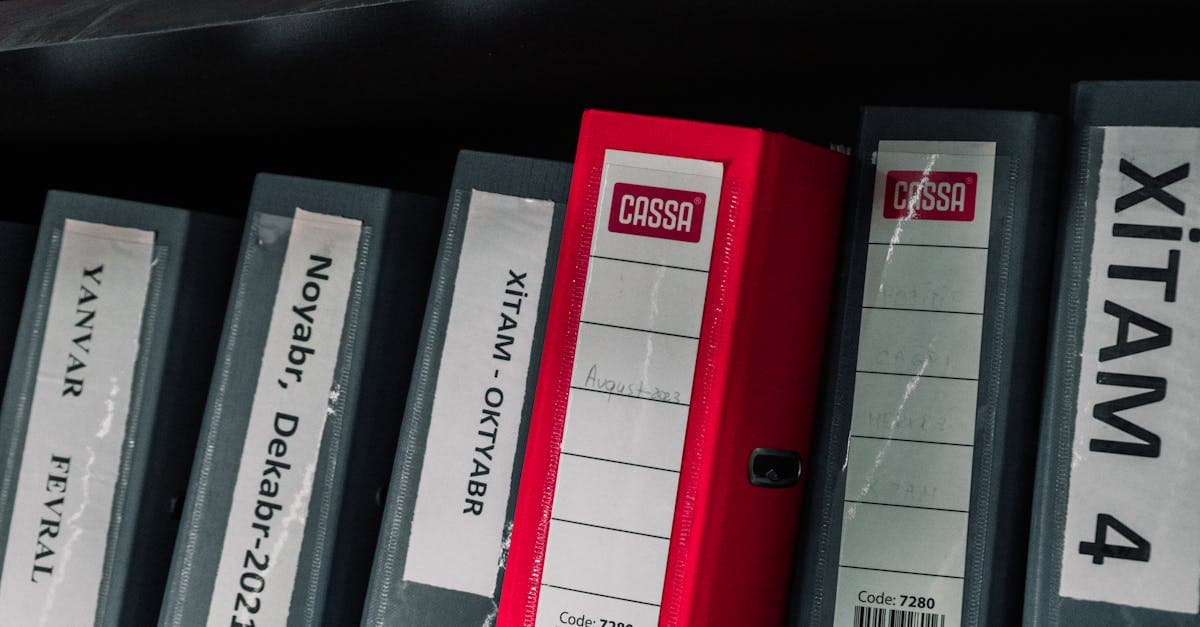
In my years of advising homeowners on insurance preparation, the single recommendation that produces the greatest return is this: document everything before you need to. It sounds simple because it is simple. But the homeowners who follow through on this advice file stronger claims and receive larger settlements than those who do not.
I have seen the difference firsthand. One homeowner kept a spreadsheet of every item in her home, updated it annually, and stored it in the cloud with photographs. When a pipe burst destroyed her finished basement, she submitted her claim with a complete inventory, photographic evidence of pre-loss condition, and receipts for the major items. Her claim was processed and settled within three weeks at full replacement cost.
Another homeowner in the same neighborhood had the same type of loss but no documentation. She spent six weeks trying to remember what was in her basement, estimated values that the adjuster reduced by forty percent, and settled for thousands less than her actual loss because she could not prove what she could not document.
The difference between these outcomes is not luck or insurance knowledge. It is preparation. And the good news is that creating an effective documentation system takes less time than most homeowners assume.
Maintenance Records That Support Your Claim
The records show a different story. Records of regular home maintenance demonstrate that you fulfilled your duty to maintain your property. This matters because insurance policies require reasonable care and may deny claims for damage caused by neglected maintenance.
Roof maintenance: Keep records of roof inspections, repairs, cleaning, and replacement. Include the date of service, the contractor's name and findings, any work performed, and the next recommended service. Roof-related claims are among the most common, and maintenance records prove your roof was in good condition before the loss.
Plumbing service records: Annual plumbing inspections, drain cleaning, water heater maintenance, and any pipe repairs should be documented. These records are critical for water damage claims, where insurers may investigate whether the failure resulted from neglected maintenance or a sudden covered event.
HVAC maintenance: Regular heating and cooling system maintenance records — filter changes, annual tune-ups, refrigerant checks — demonstrate proper system care. HVAC failure claims are strengthened by records showing the system was professionally maintained.
Electrical inspections: Records of electrical inspections, panel upgrades, and wiring repairs support claims for electrical damage or fire. They also demonstrate that your electrical system met current safety standards at the time of the loss.
Pest control records: Regular pest control service records can be relevant for claims involving termite damage, which is typically excluded, versus damage caused by other pests or animals, which may be covered. Documentation of pest prevention efforts supports your claim that you maintained your property responsibly.
Tree and landscape maintenance: Records of tree trimming, dead tree removal, and landscape maintenance can be relevant if a tree falls on your home. Evidence that you maintained trees properly can counter insurer arguments that the damage resulted from neglected tree care.
Understanding and Storing Your Policy Documents
The records show a different story. Your policy documents define the terms, limits, and conditions of your coverage. Having them accessible and understanding their contents before a loss occurs prevents surprises during the claims process.
Declarations page: This single-page summary shows your coverage limits for dwelling, other structures, personal property, loss of use, liability, and medical payments. It also lists your deductible amounts, endorsements, and policy period. Keep a current copy in your emergency document kit and your digital files.
Full policy document: The complete policy includes the declarations page, coverage forms, conditions, exclusions, and endorsements. Read it at least once so you understand what is covered, what is excluded, and what conditions apply. Note any sections that are unclear and ask your agent for clarification.
Endorsements and riders: Endorsements modify your standard coverage by adding, removing, or altering specific provisions. Common endorsements include scheduled personal property for high-value items, water backup coverage, equipment breakdown, and extended replacement cost. Verify that your endorsements match your coverage needs.
Policy storage: Store digital copies of all policy documents in your cloud storage system. Keep a physical copy in a fireproof safe or safe deposit box. Ensure that your spouse, partner, or a trusted family member knows where the documents are stored and how to access them.
Annual policy review: Review your policy documents annually, ideally at renewal. Verify that coverage limits reflect current replacement costs, endorsements match your current needs, and deductible amounts remain appropriate for your financial situation. Document any changes requested and confirm they appear on your updated declarations page.
Agent and insurer contact information: Keep your agent's name, phone number, and email address, as well as your insurer's claims department phone number and website, in an easily accessible location. In the hours after a loss, having these contacts ready saves valuable time.
Appraisals and Professional Valuations for High-Value Claims
Our investigation revealed something surprising. Professional appraisals provide independent, expert valuations that your insurer cannot easily dispute. For high-value items and complex claims, professional valuations are the strongest evidence of value you can present.
Items that require appraisals: Jewelry, fine art, antiques, collectibles, musical instruments, wine collections, and any single item worth more than one thousand dollars should have a current professional appraisal. Without an appraisal, these items are valued at generic estimates that typically fall far below actual value.
Appraisal frequency: Update appraisals every two to three years, or whenever significant market changes affect the value of your items. Jewelry and art markets fluctuate, and an outdated appraisal may understate current replacement cost.
Choosing an appraiser: Select appraisers who are certified by recognized professional organizations — the American Society of Appraisers, the International Society of Appraisers, or the Appraisers Association of America for personal property. Certified appraisers provide valuations that carry the most weight with insurers.
What the appraisal should include: A useful appraisal includes a detailed description of the item, photographs, the valuation method used, comparable sales data if applicable, the appraiser's credentials, and the appraised value with the date of valuation. This level of detail supports your claim and withstands insurer scrutiny.
Appraisal storage: Store appraisals with your insurance documents in both physical and digital formats. Include them in your home inventory file alongside photographs of the appraised items. When filing a claim, submit the appraisal proactively with your initial documentation.
Scheduled personal property endorsement: For items with significant appraised values, consider adding a scheduled personal property endorsement to your policy. This endorsement lists specific items at their appraised values, guaranteeing that the insurer pays the scheduled amount in a total loss — eliminating valuation disputes entirely.
Managing Receipts and Proof of Purchase
The records show a different story. Receipts are your primary evidence of what you paid for personal property, and they directly influence the settlement amount your insurer offers for damaged or destroyed items.
Which receipts matter most: Prioritize keeping receipts for electronics, major appliances, furniture, jewelry, artwork, sporting equipment, musical instruments, and any item worth more than one hundred dollars. These high-value items represent the largest portion of most personal property claims.
Digital receipt management: Photograph or scan paper receipts immediately after purchase. Paper receipts fade over time, becoming illegible within two to five years. A digital copy preserved in cloud storage remains readable indefinitely and survives any disaster that destroys the original.
Email receipts: Online purchases generate email receipts automatically. Create a dedicated email folder for purchase confirmations and receipts. These emails contain item descriptions, prices, and order numbers that serve as proof of purchase and value.
Credit card and bank statements as backup: When original receipts are unavailable, credit card and bank statements provide backup evidence of purchases. While they may not include item descriptions, they document the date, retailer, and amount paid. Some credit card companies can provide detailed transaction records upon request.
Receipt storage system: Organize receipts by category — electronics, appliances, furniture, home improvement, clothing — or by room. A simple folder structure in a cloud storage service keeps receipts organized and searchable. Name files with the item description and purchase date for easy retrieval.
Warranty registration as proof: Registering products for warranty creates an additional record of purchase and ownership. Manufacturers maintain registration databases that can verify you purchased the product, its serial number, and the date of acquisition.
Documenting Temporary Living Expenses for Loss of Use Claims
Our investigation revealed something surprising. If a covered loss makes your home uninhabitable, your policy's Coverage D loss of use provision pays for additional living expenses. Documenting these expenses accurately ensures you receive the full reimbursement your policy provides.
What qualifies as additional living expense: Additional living expenses are costs above your normal living expenses incurred because you cannot live in your home. The key word is "additional." If you normally spend $400 per month on groceries and you spend $600 while displaced, the additional expense is $200 per month, not $600.
Hotel and temporary housing receipts: Keep every receipt for hotel stays, short-term rental costs, and temporary housing. Document the dates of stay, the daily or monthly rate, and any required deposits. If temporary housing costs more than your normal mortgage or rent payment, the difference is your additional living expense.
Food and meal documentation: Restaurant meals and takeout costs that exceed your normal food budget are reimbursable. Keep meal receipts and compare them to your typical monthly food spending. Grocery receipts for temporary housing are reimbursable to the extent they exceed your normal grocery spending.
Transportation costs: If your temporary housing requires a longer commute, the additional fuel or transit costs are reimbursable. Document mileage logs, gas receipts, and transit passes for the period you are displaced.
Storage and pet boarding: If you need storage for belongings removed from your damaged home or boarding for pets not allowed in temporary housing, these costs are additional living expenses. Keep all receipts and rental agreements.
Laundry, utilities, and miscellaneous: Laundromat receipts, utility costs at temporary housing that exceed your normal utility bills, and other displacement-related expenses should all be documented. When in doubt about whether an expense qualifies, keep the receipt and submit it — your insurer will determine eligibility.
Creating and Maintaining a Home Inventory
Our investigation revealed something surprising. A complete home inventory is the intelligence dossier that arms your claim with the documented evidence needed to win every battle with the adjuster, from proving ownership to establishing replacement values to demonstrating the full extent of damage. It is the single most important document you can create for insurance claim readiness, yet fewer than half of homeowners have one.
Room-by-room approach: Walk through every room in your home and document every item of value. Start with the most valuable items — electronics, appliances, furniture — and work down to smaller items like clothing, kitchenware, and personal items. A thorough inventory takes three to six hours for an average home.
What to record for each item: For every item, record the description including brand and model, the approximate purchase date, the price paid or estimated value, the serial number if applicable, and the current condition. The more detail you include, the stronger your claim documentation becomes.
Photographic documentation: Photograph each item as you inventory it. Open drawers and closets to capture contents. Photograph labels, serial numbers, and brand markings. Take wide shots of entire rooms and close-up shots of individual items. These photographs are your visual proof of ownership.
Video walkthrough supplement: After photographing individual items, record a video walkthrough of each room. Narrate as you walk, pointing out items, opening cabinets, and describing anything the camera might miss. A ten-minute video walkthrough captures details you might forget to photograph individually.
Digital inventory tools: Home inventory apps like Sortly, Encircle, and the free apps offered by many insurance companies streamline the process by guiding you through each room, capturing photos within the app, and storing everything in the cloud. These tools are significantly easier than spreadsheets for most homeowners.
Update schedule: Update your inventory at least once a year and whenever you make a significant purchase. Set a recurring calendar reminder to review and update your inventory. An annual update takes thirty to sixty minutes once the initial inventory is complete.
Digital Storage and Backup Strategies for Claim Documents
The records show a different story. Storing your insurance documents digitally is assembling a complete intelligence file of ownership records, valuation evidence, and damage documentation so that your claim is armed with everything it needs to secure full payment on every front. Physical documents stored in your home can be destroyed by the same event that triggers your claim, making off-site digital storage essential for claim readiness.
Cloud storage setup: Choose at least one cloud storage service — Google Drive, Dropbox, iCloud, or OneDrive — and create a dedicated folder structure for your insurance documents. Organize by category: policy documents, home inventory, receipts, photographs, home improvements, and maintenance records.
Redundant backup strategy: Store your documents in at least two separate locations. A cloud service plus a USB drive stored at a relative's home, or two different cloud services, provides redundancy that protects against both physical disasters and service outages.
Scanning physical documents: Use a scanner app on your smartphone to digitize paper receipts, policy documents, contractor invoices, and maintenance records. Modern scanning apps produce clear, readable copies that are accepted by insurers as proof of purchase and ownership.
Automatic photo backup: Enable automatic photo backup on your smartphone so that photographs of your home and belongings are uploaded to the cloud as they are taken. This ensures that even photographs taken casually — at holidays, during gatherings — are preserved as evidence of your possessions.
Document naming conventions: Name digital files descriptively for easy searching. Use formats like "receipt-samsung-tv-2024-03-15" or "inventory-master-bedroom-2025-01" so you can quickly find any document your adjuster requests.
Access sharing: Share access to your digital document folder with your spouse, partner, or a trusted family member. If you are unable to manage your claim personally — due to injury, travel, or emotional distress — someone else can access your documentation and begin the claims process on your behalf.
Completing the Proof of Loss Form
Our investigation revealed something surprising. The proof of loss is a formal, sworn document that your insurer may require for claims above a certain threshold. Completing it accurately is the intelligence dossier that arms your claim with the documented evidence needed to win every battle with the adjuster, from proving ownership to establishing replacement values to demonstrating the full extent of damage, because errors or omissions can delay your claim or reduce your settlement.
What the proof of loss is: A proof of loss is a notarized statement signed under oath that details the items lost or damaged, their values, the circumstances of the loss, and the amount claimed. Your insurer typically provides the form and sets a deadline for submission — often sixty days from the date of loss.
Information required: The proof of loss typically requires your policy number, the date and cause of loss, a detailed listing of damaged or destroyed items with values, the amount claimed for dwelling damage, the amount claimed for personal property, any other applicable coverages, and a statement that the information is true and complete.
Accuracy requirements: Because the proof of loss is signed under oath, every figure and statement must be accurate. Overstating values or including items not actually lost can be considered fraud and may result in claim denial. Understating values may limit your recovery. Use your documentation — receipts, appraisals, inventory — to ensure accuracy.
Deadline management: Track the proof of loss deadline carefully. If you need more time due to the complexity of your loss, request a written extension from your insurer before the deadline passes. Missing the deadline without an extension can jeopardize your claim.
Professional assistance: For large or complex claims, consider hiring a public adjuster or consulting an attorney before submitting your proof of loss. These professionals can ensure your document is complete, accurate, and claims the maximum amount your documentation supports.
Copies and records: Keep signed copies of your proof of loss and the notarization documentation. File them with your claim correspondence. If your insurer disputes any aspect of the proof of loss, your copies provide evidence of exactly what you submitted.
Quick Takeaways for Home Insurance Claim Documentation
If you remember nothing else, remember these five priorities:
One: Create a home inventory with photographs of every room and valuable item. This single document has the greatest impact on personal property claim settlements of any record you can maintain.
Two: Keep receipts for major purchases — electronics, appliances, furniture, jewelry, and anything worth more than one hundred dollars. Digital copies stored in the cloud survive any disaster.
Three: Store all insurance documents — your policy, inventory, receipts, and photographs — in at least two locations, with at least one being a cloud service that survives physical disasters.
Four: After a loss, document all damage with photographs and video before any cleanup or repairs begin. Then keep every receipt for emergency repairs, temporary living expenses, and claim-related costs.
Five: Record every interaction with your insurer in writing. Date, name, summary, and commitments from every call and meeting create an accountability trail that protects you throughout the claims process.
Continue reading

Independent Agents vs Direct Carriers: How Quote Sources Affect Comparison
Where you get your quotes affects what you see. Independent agents compare multiple carriers while direct carriers show only their own products. Understanding this distinction shapes your comparison strategy.
Policy Checkup for Life Insurance: Does Your Coverage Still Match Your Needs?
Life insurance needs change as children grow, mortgages are paid down, and retirement savings accumulate. A checkup ensures your death benefit still provides the protection your family needs.

Assignment of Benefits and Insurance Litigation: How Lawsuits Escalate
When a contractor with your AOB disputes the insurer's payment, they can sue your insurer in your name. This litigation drives up costs and can affect your claims history.