How Collision Insurance Premiums Are Calculated

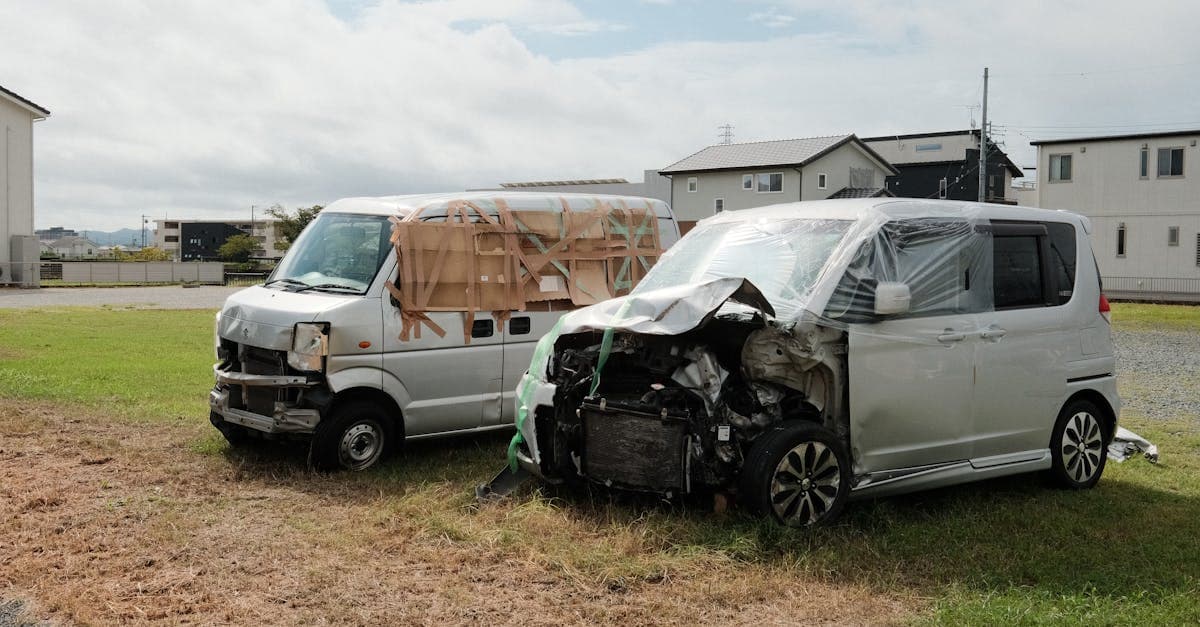
In my experience working with auto insurance policyholders, collision coverage generates more questions than almost any other part of the policy. Drivers want to know exactly what it covers, whether they truly need it, and when they can safely drop it to save money.
The answers are not as simple as the insurance industry makes them sound. Collision insurance covers damage to your vehicle from impact with another vehicle or object. That is the textbook definition. But the real-world application involves nuances around deductibles, actual cash value calculations, fault determination, subrogation, and the interaction with other coverages that dramatically affect what you receive after an accident.
Here is what I tell every policyholder: collision coverage is the defensive perimeter that keeps collision costs from breaching your reserves. If you cannot afford to repair or replace your vehicle out of pocket after an accident, you need collision coverage. If you can afford the replacement cost without financial hardship, collision becomes optional — and the math determines whether carrying it makes sense.
Most drivers fall into the first category. The average vehicle on American roads is worth approximately $15,000, and most households could not absorb a $15,000 loss without significant financial strain. For these drivers, collision coverage at $30 to $50 per month provides essential protection against a common and costly risk.
This guide walks through every aspect of collision coverage — what it is, how it works, what it costs, and how to optimize it for your situation.
Collision Insurance and Auto Loans: Lender Requirements
When we pressed further, the picture changed. If you finance or lease a vehicle, your lender has a financial interest in that vehicle and requires you to protect it. Collision coverage is the defensive perimeter that keeps collision costs from breaching your reserves that lenders mandate to secure their investment.
Standard lender requirements: Virtually every auto lender requires collision coverage for the life of the loan. The typical requirement includes collision with a maximum deductible of $500 or $1,000, comprehensive coverage, and the lender listed as a lienholder on the policy.
What happens if you drop coverage: If you cancel collision coverage or let your policy lapse, your lender will know — insurers notify lienholders of policy changes. The lender will then purchase force-placed insurance on your behalf. This coverage is significantly more expensive than standard collision insurance and protects only the lender's interest, not yours.
Lease requirements are even stricter. Lease agreements typically require collision with a low deductible (often $500 maximum), comprehensive coverage, and sometimes gap coverage. Since the leasing company owns the vehicle, they set the insurance terms, and failure to comply can trigger lease default provisions.
Matching coverage to loan balance: As you pay down your loan and your vehicle depreciates, a gap can develop between your loan balance and the vehicle's actual cash value. If your vehicle is totaled early in the loan, the collision payout may not cover what you owe. Gap insurance or new-car replacement endorsements address this vulnerability.
The refinancing opportunity: If you refinance your auto loan, review the new lender's coverage requirements. Some lenders accept higher deductibles, which can lower your premium. Always confirm requirements in writing before changing your collision coverage.
Collision Insurance for Leased Vehicles
Our investigation revealed something surprising. Leasing a vehicle means you do not own it — the leasing company does. Their ownership interest drives strict insurance requirements, including collision coverage that serves as the defensive perimeter that keeps collision costs from breaching your reserves for their asset.
Standard lease collision requirements: Most leases require collision coverage with a maximum deductible of $500. Some luxury brands or specific lease programs may require $250. These requirements are non-negotiable — they are written into the lease contract.
The cost impact: Lease collision requirements often force drivers into lower deductibles than they might otherwise choose, resulting in higher premiums. This additional cost should be factored into your total lease budget when comparing leasing to buying.
Gap coverage and leases: Many lease agreements include gap coverage — meaning if the vehicle is totaled, the leasing company absorbs the difference between the ACV payout and the remaining lease balance. Verify whether your lease includes gap coverage before purchasing it separately. If it is not included, gap coverage is particularly important for leased vehicles.
End-of-lease damage considerations: When you return a leased vehicle, the leasing company charges for damage beyond normal wear and tear. Some drivers file collision claims for significant damage before returning the vehicle to avoid end-of-lease charges. Be aware that filing claims can affect your insurance rates and claim history.
Excess wear-and-tear coverage is an optional product offered by some leasing companies that covers end-of-lease damage charges. This is separate from collision insurance but addresses a related concern. Compare the cost of this coverage against the typical end-of-lease charges to determine whether it offers value.
Accident Forgiveness and Collision Insurance
The records show a different story. Accident forgiveness programs prevent your first at-fault collision claim from increasing your premium at renewal. Understanding these programs helps you maximize the value of your collision coverage.
How accident forgiveness works: With accident forgiveness, your insurer does not apply a rate increase for your first at-fault accident. Without it, a single at-fault collision claim can increase your premium by 20 to 40 percent for three to five years — a cumulative cost of $1,000 to $3,000 or more.
Earned vs purchased accident forgiveness: Some insurers automatically provide accident forgiveness after a qualifying claims-free period — typically five to six years. Others sell it as a paid endorsement for $50 to $100 per year. The earned version costs nothing but requires patience. The purchased version provides immediate protection.
Limitations to understand: Accident forgiveness typically applies to only one accident. A second at-fault collision during the same policy period will trigger a rate increase. Some insurers forgive one accident per driver, while others forgive one per policy — an important distinction for multi-driver households.
Portability between insurers: Accident forgiveness earned with one insurer typically does not transfer to another. If you switch carriers, your new insurer sees your at-fault accident on your record and rates accordingly — even though your previous insurer forgave it. This lock-in effect should be considered when shopping rates.
State availability varies. Not all states allow accident forgiveness programs. Check whether your state permits this feature and which insurers in your area offer it. Where available, it is one of the most valuable endorsements you can add to your collision coverage.
Cost-benefit analysis: If accident forgiveness costs $75 per year and prevents a $300 annual rate increase for three years, the potential savings of $900 far exceed the cost. For drivers with otherwise clean records, the endorsement is almost always worth purchasing.
What Collision Insurance Does Not Cover
The records show a different story. Understanding collision exclusions is just as important as understanding what is covered. These are the most common situations where collision insurance does not apply.
Theft and vandalism are comprehensive coverage claims, not collision. If someone steals your car or deliberately damages it, collision coverage will not pay. You need comprehensive coverage for these risks.
Weather-related damage without impact falls under comprehensive. Hail damage, flooding, tree branches falling on your parked car, and wind damage are all comprehensive claims. However, if a storm causes you to lose control and crash into something, that resulting impact is a collision claim.
Animal collisions are classified as comprehensive in most policies. Hitting a deer, bird strike damage, and other animal-related incidents are covered by comprehensive, not collision. This is a common point of confusion for policyholders.
Mechanical failure and wear are never covered by collision insurance. Engine failure, transmission problems, brake wear, and other mechanical issues are maintenance responsibilities, not insurance claims. Even if a mechanical failure causes an accident, the failure itself is not covered — though the resulting collision damage may be.
Personal belongings inside the vehicle damaged in a collision are not covered by auto insurance at all. Your laptop, phone, or other items in the car would be covered under your homeowners or renters policy, not your collision coverage. Many drivers assume their auto policy covers everything in the vehicle, but personal property is explicitly excluded from collision and comprehensive coverage alike.
When to Drop Collision Coverage: The Financial Decision
When we pressed further, the picture changed. Dropping collision coverage is a significant financial decision that depends on your vehicle's value, your savings, and your ability to absorb a total loss. Here is a framework for making this choice.
The ten percent rule: Consider dropping collision when your annual collision premium exceeds 10 percent of your vehicle's actual cash value. If your vehicle is worth $4,000 and your collision premium is $500 per year, you are paying 12.5 percent of the vehicle's value annually for coverage. At that rate, you effectively insure the entire vehicle value in premiums every eight years.
The self-insurance test: Could you replace your vehicle out of pocket if it were totaled tomorrow? If yes, collision coverage is optional. If no, the coverage is likely still worth carrying regardless of the percentage calculation. This test is about financial capability, not vehicle value alone.
The transportation dependency factor: If your vehicle is essential for getting to work and you have no alternative transportation, the consequences of losing it without coverage are severe. Even on a low-value vehicle, collision coverage may be worth carrying if the alternative is losing your income.
The gradual transition: Some drivers gradually increase their deductible as their vehicle ages rather than dropping coverage entirely. Moving from a $500 to a $1,000 to a $2,000 deductible reduces premiums while maintaining catastrophic protection. This approach preserves coverage for severe damage while accepting that minor damage is not worth claiming.
When lenders decide for you: If your vehicle has an outstanding loan or lease, your lender almost certainly requires collision coverage. You cannot drop it until the loan is paid off without risking a lender-placed policy that costs significantly more.
Gap Insurance: When Collision Coverage Is Not Enough
Our investigation revealed something surprising. Collision insurance pays your vehicle's actual cash value — but if you owe more than the vehicle is worth, there is a dangerous gap between your insurance payout and your loan balance. Gap insurance bridges this divide.
How the gap develops: New vehicles depreciate rapidly — losing 20 to 30 percent of their value in the first year. If you financed with a small down payment, long loan term, or rolled negative equity from a previous vehicle into the new loan, you can easily owe $5,000 to $10,000 more than your vehicle is worth.
What gap insurance covers: If your vehicle is totaled in a collision and the ACV payout is $18,000 but your loan balance is $24,000, gap insurance pays the $6,000 difference. Without gap coverage, you owe $6,000 on a vehicle you no longer have.
Where to buy gap insurance: Dealers sell gap coverage at the time of purchase, often for $500 to $800. Auto insurers sell it as a policy endorsement, typically for $20 to $40 per year. The insurer option is almost always cheaper. Your credit union or bank may also offer gap coverage as a loan add-on.
When gap insurance makes sense: Gap coverage is most valuable during the first two to three years of a loan, when the depreciation-vs-loan-balance gap is widest. As you pay down the principal and the depreciation curve flattens, the gap narrows and gap coverage becomes less necessary.
New car replacement coverage is an alternative offered by some insurers. Instead of paying the gap between ACV and loan balance, it pays to replace your totaled vehicle with a new one of the same make and model. This coverage is typically available only for vehicles less than one to two years old.
Vehicle Safety Features and Collision Insurance Discounts
The records show a different story. Modern vehicles are equipped with collision avoidance technology that reduces accident frequency and severity. Many insurers reward these features with collision premium discounts.
Automatic emergency braking (AEB): Vehicles with AEB systems that automatically apply brakes when a collision is imminent experience significantly fewer front-end collisions. Insurers offer discounts of 5 to 15 percent on collision coverage for vehicles equipped with this technology.
Forward collision warning: Systems that alert drivers to an impending collision without automatically braking also earn discounts, though typically smaller than AEB discounts. The warning gives drivers additional reaction time to avoid or reduce the severity of an impact.
Lane departure warning and assistance: These systems reduce single-vehicle accidents caused by drifting out of the lane. While the discount is modest — typically 2 to 5 percent — it contributes to an overall safety feature discount that can be meaningful.
Blind spot monitoring: By alerting drivers to vehicles in their blind spots, these systems reduce lane-change collisions. The collision premium impact varies by insurer but generally contributes to a lower risk rating.
Adaptive cruise control: By maintaining a safe following distance automatically, adaptive cruise control reduces rear-end collisions. Some insurers factor this feature into their collision risk assessment.
The cumulative effect: While individual safety feature discounts may seem small, a vehicle equipped with multiple advanced safety systems can earn cumulative discounts of 10 to 25 percent on collision coverage. When shopping for a new vehicle, consider the insurance impact of safety features as part of your total cost of ownership calculation.
Understanding Betterment Charges in Collision Claims
When we pressed further, the picture changed. When collision repairs improve your vehicle beyond its pre-accident condition, the insurer may charge you for the improvement — a concept called betterment. Understanding betterment prevents surprise charges during the repair process.
What betterment means: Insurance aims to restore your vehicle to its pre-loss condition — not better, not worse. If a collision repair replaces worn components with new ones, the new parts improve your vehicle's condition. The insurer may charge you for this improvement because they are obligated to restore, not upgrade.
Common betterment scenarios: The most frequent betterment charge involves tires. If your vehicle has tires with 50 percent tread wear and the collision damages two tires, the insurer replaces them with new tires but charges you 50 percent of the cost — reflecting the betterment from worn to new. Similar charges can apply to batteries, brake components, and suspension parts.
Paintwork and betterment: If your vehicle's existing paint is faded or damaged from age and the collision repair includes repainting panels, the insurer generally does not charge betterment for paint because matching the existing finish requires full repainting regardless. However, if you request a full-vehicle repaint when only one panel was damaged, the additional cost would be your responsibility.
When betterment is unfair: Betterment charges can feel unfair when the worn part cannot be repaired — only replaced with new. If the collision destroyed a tire, you cannot buy a 50-percent-worn replacement. Some states have regulations limiting betterment charges in these situations, and some policies exclude betterment charges entirely.
Challenging betterment charges: Review your policy's betterment clause before you need it. If you receive a betterment charge that seems unreasonable, negotiate with the adjuster. Document the condition of the replaced components and reference any state regulations that may limit the charge.
Quick Takeaways on Collision Insurance
Five essential points about collision insurance that every driver should remember:
One: Collision insurance pays to repair or replace your vehicle after impact with another vehicle or object, regardless of fault. It does not cover theft, vandalism, weather damage, or mechanical failure — those are comprehensive or maintenance issues.
Two: Your deductible is the most controllable cost factor. Choose the highest amount you can comfortably pay from savings. For most drivers, $500 to $1,000 provides the best balance of premium savings and manageable out-of-pocket cost.
Three: Collision coverage pays actual cash value, not replacement cost. Depreciation reduces what you receive for a total loss. Gap insurance covers the difference between ACV and your loan balance if you are upside down on your financing.
Four: Consider dropping collision when annual premium exceeds 10 percent of vehicle value and you can afford to self-insure. This typically occurs when vehicles reach eight to twelve years old depending on make and model.
Five: Shop rates every two to three years. Collision premiums vary dramatically between insurers, and the cheapest option changes frequently. Active comparison is the single most effective way to reduce your collision insurance cost.
Apply these five principles and your collision coverage will be optimized for your situation.
Continue reading

Independent Agents vs Direct Carriers: How Quote Sources Affect Comparison
Where you get your quotes affects what you see. Independent agents compare multiple carriers while direct carriers show only their own products. Understanding this distinction shapes your comparison strategy.
Policy Checkup for Life Insurance: Does Your Coverage Still Match Your Needs?
Life insurance needs change as children grow, mortgages are paid down, and retirement savings accumulate. A checkup ensures your death benefit still provides the protection your family needs.

Assignment of Benefits and Insurance Litigation: How Lawsuits Escalate
When a contractor with your AOB disputes the insurer's payment, they can sue your insurer in your name. This litigation drives up costs and can affect your claims history.