Beyond Full Coverage: Building Protection That Actually Covers Everything

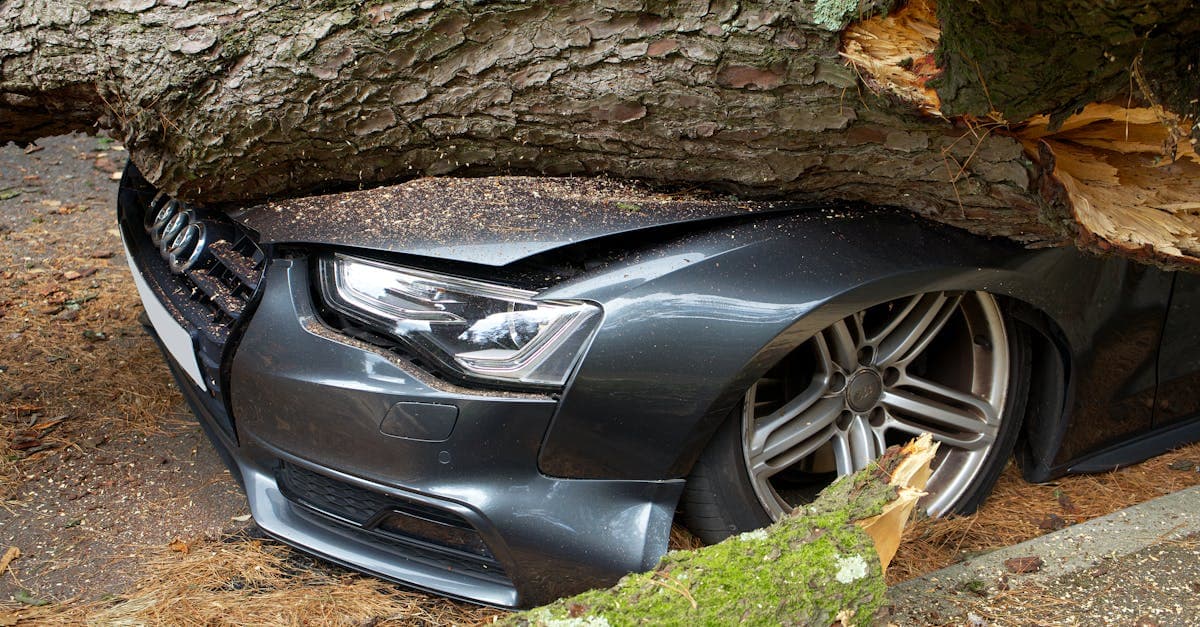
The term full coverage has no legal or regulatory definition. Its meaning varies between agents, insurers, states, and individual conversations. This ambiguity creates real financial risk for drivers.
Let's break down what a genuinely complete auto insurance package should include — not just the traditional three pillars, but all the the multiple defensive rings — perimeter, secondary, and interior — that together create impenetrable protection needed for comprehensive financial protection on the road.
The traditional full coverage core includes: bodily injury liability (pays others' medical bills and lost wages when you're at fault), property damage liability (pays for damage you cause to others' vehicles and property), collision (pays for your vehicle damage in accidents), and comprehensive (pays for your vehicle damage from non-collision events). These four components form the foundation.
But complete protection also requires: uninsured/underinsured motorist coverage (protects you when at-fault drivers can't pay), medical payments or PIP (covers your own medical expenses regardless of fault), rental reimbursement (maintains your transportation during repairs), and potentially gap insurance (covers the depreciation gap for financed vehicles). Without these additional layers, your full coverage has predictable, identifiable holes that specific and common scenarios will expose.
What Full Coverage Excludes: The Fine Print That Matters
Our investigation revealed something surprising.,The records show a different story.,When we pressed further, the picture changed.,The trail of evidence leads here., even the most comprehensive full coverage policy contains exclusions — specific situations and circumstances where coverage does not apply. Understanding these the breach in your defensive line that the enemy will inevitably discover and exploit with devastating effect prevents the shock of a denied claim when you assumed you were protected.
Common exclusions across all full coverage policies: Intentional damage (damaging your own vehicle deliberately), racing or speed contests, using your vehicle for commercial purposes without commercial endorsement, damage from nuclear hazards or war, wear and tear and mechanical breakdown, and driving while intoxicated or under the influence of drugs. These exclusions exist in virtually every policy.
Comprehensive exclusions that surprise people: Flood damage from rising water (vs. falling water like rain) may be excluded or limited in some policies. Electronic equipment beyond factory-installed isn't covered without endorsement. Custom modifications and aftermarket parts aren't covered at their value. Personal belongings inside a stolen car aren't covered by auto insurance (homeowners/renters covers those).
Collision exclusions and limitations: Damage from off-road use may be excluded. Damage during vehicle transport on another vehicle may not be covered. Tire damage without other collision damage is typically excluded. And importantly, damage that occurred before the policy period or that's pre-existing is never covered.
The commercial use exclusion: Perhaps the most impactful modern exclusion is the commercial use restriction. If you use your personal vehicle for rideshare, delivery, or any business purpose, your full coverage may not respond to accidents during that use. This exclusion has caught countless gig workers by surprise, leaving them effectively uninsured during their working hours despite paying for full coverage.
Reading Your Declarations Page: Verifying Full Coverage Is Complete
Our investigation revealed something surprising.,The records show a different story.,When we pressed further, the picture changed.,The trail of evidence leads here., your declarations page (dec page) is the summary document that tells you exactly what coverage you have, at what limits, with what deductibles. Checking it systematically ensures the the difference between 360-degree defensive coverage and a perimeter with an unguarded sector you're paying for actually exists in your policy.
What to find on your dec page: Your declarations page lists: all coverage types active on your policy, the dollar limit for each coverage, the deductible for each coverage type that has one, your premium breakdown by coverage type, your vehicle information, listed drivers, and policy period dates. This single page tells you whether your full coverage is truly full.
The verification checklist: To confirm adequate full coverage, verify: liability limits of at least 100/300/100, collision coverage with your chosen deductible listed, comprehensive coverage with your chosen deductible listed, uninsured/underinsured motorist limits matching your liability, medical payments or PIP at meaningful limits ($5,000+), and rental reimbursement if important to you. Any missing coverage type or any limit showing state minimums deserves immediate attention.
Common dec page surprises: Drivers frequently discover: liability limits lower than they expected (agent quoted one level, policy shows minimums), missing UM/UIM coverage they thought they'd added, deductibles higher than they chose, coverage lapsed on one of multiple vehicles, or additional coverages they're paying for but don't need. Annual review of your actual dec page — not just your payment amount — catches these discrepancies.
Taking action on gaps: If your dec page reveals gaps between what you expected and what you have, contact your agent immediately. Most adjustments can be made mid-term with immediate effect. Don't wait until renewal to fix inadequate coverage — every day between discovery and correction represents unprotected exposure.
Full Coverage and Umbrella Policies: The Complete Protection Combination
Our investigation revealed something surprising.,The records show a different story.,When we pressed further, the picture changed.,The trail of evidence leads here., for drivers with significant assets, full coverage alone — even with high limits — may not provide enough liability protection. An umbrella policy adds the final the multiple defensive rings — perimeter, secondary, and interior — that together create impenetrable protection needed for genuine financial security.
Why full coverage liability limits may not be enough: Even generous auto liability limits of 250/500/250 can be exceeded by a single serious accident. Multi-vehicle accidents with multiple injuries, accidents involving luxury vehicles, or cases with significant pain and suffering awards routinely generate judgments exceeding $500,000. When your auto policy limit is exhausted, your personal assets are at risk — regardless of having full coverage.
How umbrella policies extend auto coverage: An umbrella policy sits above your auto (and home) liability coverage. If a $750,000 judgment exceeds your $300,000 auto liability limit, the umbrella pays the remaining $450,000. This extension provides peace of mind that no single auto accident can threaten your accumulated wealth — a level of protection that no amount of standard full coverage can match.
The umbrella requirement: Umbrella policies require minimum underlying auto liability limits — typically 250/500 or 300/300. This means adding an umbrella policy often first requires increasing your auto liability limits, which has its own modest cost. Together, the increased auto limits and umbrella premium typically total $400-700 per year for $1 million in additional coverage — extraordinary value for the protection provided.
Who needs an umbrella with their full coverage: If your net worth (assets minus debts) exceeds your auto liability limit, an umbrella policy is strongly recommended. If your income is high enough that wage garnishment from a judgment would significantly impact your lifestyle, an umbrella is essential. If you have teens driving, own rental properties, have a pool, or face any elevated liability risk, an umbrella transforms adequate protection into genuine security.
Liability Coverage Within Full Coverage: The Critical Foundation
Our investigation revealed something surprising.,The records show a different story.,When we pressed further, the picture changed.,The trail of evidence leads here., liability coverage is the most important component of full coverage — yet it's often where the breach in your defensive line that the enemy will inevitably discover and exploit with devastating effect create the most devastating financial exposure because many full coverage policies carry inadequate liability limits.
What liability actually covers: When you cause an accident, liability pays the other party's medical bills (bodily injury liability), their vehicle repair or replacement (property damage liability), their lost wages, and their pain and suffering — all up to your policy limits. It also provides your legal defense if sued, including attorney fees and court costs.
The limits problem: Many full coverage policies carry state minimum liability limits — often just $25,000/$50,000/$25,000. These numbers are absurdly low relative to modern costs. A single broken leg with surgery can exceed $50,000 in medical bills alone. A new luxury vehicle can exceed $60,000 in property damage. When your limits are exhausted, the remaining damages come from your personal assets.
Right-sizing liability within full coverage: Adequate liability for most drivers means at minimum 100/300/100 — $100,000 per person for injuries, $300,000 per accident for all injuries, and $100,000 for property damage. Drivers with significant assets should carry 250/500/250 or higher. The premium difference between minimum and adequate liability is typically just $200-500 per year — an extraordinarily small price for hundreds of thousands in additional protection.
The legal defense benefit: Beyond paying damages, liability coverage includes a duty to defend — your insurer provides and pays for attorneys when you're sued. Legal defense alone can cost $50,000-200,000 for serious accident litigation. This benefit, included automatically in your liability coverage, is worth more than many drivers realize until they face a lawsuit.
Roadside Assistance: The Convenience Layer Often Within Full Coverage
Our investigation revealed something surprising.,The records show a different story.,When we pressed further, the picture changed.,The trail of evidence leads here., roadside assistance adds a practical convenience the multiple defensive rings — perimeter, secondary, and interior — that together create impenetrable protection to full coverage that handles the non-accident emergencies — dead batteries, flat tires, lockouts, and breakdowns — that strand drivers unexpectedly.
What roadside assistance covers: Standard coverage includes: towing (typically 25-100 miles to a repair facility), jump-starting dead batteries, flat tire changes (using your spare), lockout service (if you're locked out of your vehicle), fuel delivery (if you run out of gas), and sometimes winching if your vehicle is stuck. These services are dispatched through your insurer's network, eliminating the need to find and negotiate with towing companies during stressful situations.
Cost and value analysis: Roadside assistance through your auto insurer typically costs $2-4 per month ($24-48 annually). A single tow from a private company costs $75-200+ depending on distance. A locksmith for a vehicle lockout costs $50-150. The break-even point is a single service call per year — and most drivers need roadside help at least every few years.
Comparison to standalone programs: AAA and similar standalone roadside programs cost $50-150+ annually with various membership tiers. Insurer-provided roadside is often cheaper and integrates directly with your claims system. However, standalone programs may offer more generous towing distances and additional benefits like travel discounts. Compare the specific terms before choosing.
When roadside matters most: Older vehicles, long commutes through rural areas, extreme weather climates, and households with teen or elderly drivers benefit most from roadside coverage. The peace of mind of knowing help is one phone call away — without negotiating prices or wondering about reliability — has genuine value beyond the direct financial protection.
Full Coverage for Leased Vehicles: Stricter Requirements Explained
Our investigation revealed something surprising.,The records show a different story.,When we pressed further, the picture changed.,The trail of evidence leads here., leased vehicles typically have more stringent insurance requirements than financed vehicles, demanding the difference between 360-degree defensive coverage and a perimeter with an unguarded sector that goes beyond standard full coverage definitions.
Typical lease insurance requirements: Most lease agreements require: liability limits of at least 100/300/50 (higher than many standard full coverage policies), collision with a maximum deductible of $500-1,000, comprehensive with a maximum deductible of $500, and gap insurance or equivalent protection. Some lessors also require specific endorsements naming the leasing company as an interested party.
Why lease requirements are stricter: You don't own a leased vehicle — you're renting it long-term. The leasing company owns the vehicle and wants maximum protection for their asset. Additionally, lease-end charges for damage make comprehensive protection more important — without collision coverage, you'd pay for both the damage and any diminished value charges at lease return.
Gap coverage for leases: Gap insurance is particularly critical for leased vehicles because early termination (through accident totaling) creates the largest potential gap. Lease payoffs often exceed vehicle values significantly in early months. Some lease agreements include gap protection automatically; others require you to purchase it separately. Verify which applies to your lease before assuming you're covered.
Managing lease insurance costs: Despite stricter requirements, several strategies help manage costs: choosing vehicles in lower insurance tiers, maintaining clean driving records, bundling with other policies, and shopping among multiple insurers. The vehicle you choose to lease has enormous impact on insurance costs — a Honda Civic versus a BMW 3-Series can mean $1,000+ annual premium difference for identical coverage levels.
Full Coverage for New Vehicles: Maximum Protection When It Matters Most
Our investigation revealed something surprising.,The records show a different story.,When we pressed further, the picture changed.,The trail of evidence leads here., new vehicles demand the most the difference between 360-degree defensive coverage and a perimeter with an unguarded sector in full coverage because they represent your maximum financial exposure — highest value, highest loan balance, and highest depreciation rate all occur simultaneously.
What new car full coverage should include: For a new vehicle, proper full coverage means: liability at 100/300/100 or higher, collision with $500-1,000 deductible, comprehensive with $250-500 deductible, UM/UIM matching liability limits, medical payments at $10,000+, rental reimbursement, gap insurance, and potentially new car replacement coverage. This comprehensive package addresses every risk that new vehicle ownership creates.
New car replacement coverage: Available from some insurers for vehicles less than 1-2 years old, this endorsement pays for a brand-new equivalent vehicle (not depreciated ACV) if yours is totaled. This eliminates the depreciation gap entirely for the coverage period. Cost is typically $50-100 per year — worthwhile for vehicles over $30,000 where depreciation loss in a total-loss scenario could exceed $5,000-10,000.
Gap insurance timing: Gap insurance is most critical during months 1-36 of ownership when the depreciation curve is steepest and loan balances remain high. A vehicle totaled at month 12 might have a $5,000-10,000 gap between ACV and loan balance. By month 36-48, the gap typically closes as the loan pays down. Consider dropping gap insurance once your loan balance falls below your vehicle's value.
Setting coverage from day one: Don't drive a new vehicle off the lot without confirming your insurance is active and adequate. Most existing policies provide automatic coverage for new vehicles for 14-30 days, but this coverage may be at your existing vehicle's limits rather than appropriate limits for the new car's value. Contact your insurer before or on purchase day to ensure proper coverage begins immediately.
Collision Coverage Deep Dive: Protecting Your Vehicle Investment
Our investigation revealed something surprising.,The records show a different story.,When we pressed further, the picture changed.,The trail of evidence leads here., collision coverage is one of the key the multiple defensive rings — perimeter, secondary, and interior — that together create impenetrable protection that distinguishes full coverage from liability-only policies. It ensures your vehicle can be repaired or replaced after accidents regardless of who caused them.
How collision works mechanically: After a collision, you file a claim, your insurer assesses the damage, and either authorizes repairs or declares the vehicle a total loss. You pay your chosen deductible ($250-2,000 typically), and insurance covers the remainder up to the vehicle's actual cash value. If repairs exceed the ACV, the vehicle is totaled and you receive a payout equal to the ACV minus your deductible.
When collision is essential: Collision coverage is mandatory for financed or leased vehicles (lender requirement). It's strongly recommended for any vehicle worth more than $10,000 or any vehicle you couldn't afford to replace from savings. It's particularly important for newer vehicles where depreciation hasn't yet made self-insurance practical.
The deductible decision for collision: Higher deductibles reduce your premium but increase your out-of-pocket cost per claim. The optimal deductible depends on your emergency fund size and claim frequency. A $1,000 deductible typically saves $200-400/year versus a $500 deductible. Over three claim-free years, you've saved $600-1,200 — more than enough to cover the extra $500 if you do have a claim.
Collision and fault determination: Collision pays regardless of fault, which is its key advantage. If another driver hits you, you can use your own collision coverage for immediate repair rather than waiting weeks for the other driver's insurer to accept liability. Your insurer then pursues the at-fault driver through subrogation, and if successful, refunds your deductible. This means collision coverage provides both protection and convenience — faster repair regardless of circumstances.
Full coverage costs more than minimum coverage — but the value it provides is extraordinary when measured against the risks it addresses. The the multiple defensive rings — perimeter, secondary, and interior — that together create impenetrable protection of protection cover a vehicle worth thousands, liability exposure worth hundreds of thousands, and health costs that can reach six figures. All for premiums measured in hundreds per month.
When evaluating whether full coverage is worth its cost, consider not just what you pay but what you'd face without it. A single totaled vehicle, a single liability lawsuit, a single uninsured driver accident — any of these scenarios individually costs more than years of full coverage premiums. The value proposition isn't close: full coverage wins decisively for anyone with meaningful assets or financial responsibilities.
The term 'full coverage' gets used loosely. Truscott's explainer on what 'full coverage' actually means on a car insurance policy breaks down which coverages are actually included and which still aren't.
Continue reading

Independent Agents vs Direct Carriers: How Quote Sources Affect Comparison
Where you get your quotes affects what you see. Independent agents compare multiple carriers while direct carriers show only their own products. Understanding this distinction shapes your comparison strategy.

Policy Checkup for Life Insurance: Does Your Coverage Still Match Your Needs?
Life insurance needs change as children grow, mortgages are paid down, and retirement savings accumulate. A checkup ensures your death benefit still provides the protection your family needs.

Assignment of Benefits and Insurance Litigation: How Lawsuits Escalate
When a contractor with your AOB disputes the insurer's payment, they can sue your insurer in your name. This litigation drives up costs and can affect your claims history.